
Seeking specific insights on learning, education, or all things Penn State? Dive into our blog with the search below!
Motivation vs. Discipline: Why Showing Up Matters More Than Feeling Ready
Waiting to feel motivated before you get to work? That's the trap. Discipline, not motivation, is what separates the students who show up consistently from everyone else, and the research on effort shows you can actually train yourself to dread it less. Here's why, plus 5 practical ways to make discipline easier to switch on.

What Actually Counts as Studying?
Think studying only counts if you're sitting with a textbook the night before an exam? Reviewing notes, doing homework, and quizzing yourself all count too. Here's a simple 3-column trick to figure out what you actually know versus what just feels familiar.

5 Tips to Ace English 15 at Penn State
English 15 is an introductory writing course required for all Penn State students. Though it may seem easy on paper, it’s important to take it as seriously as all your other courses. We’ve compiled some tips from current Penn State English 15 instructors and previous students to help you succeed in the class!
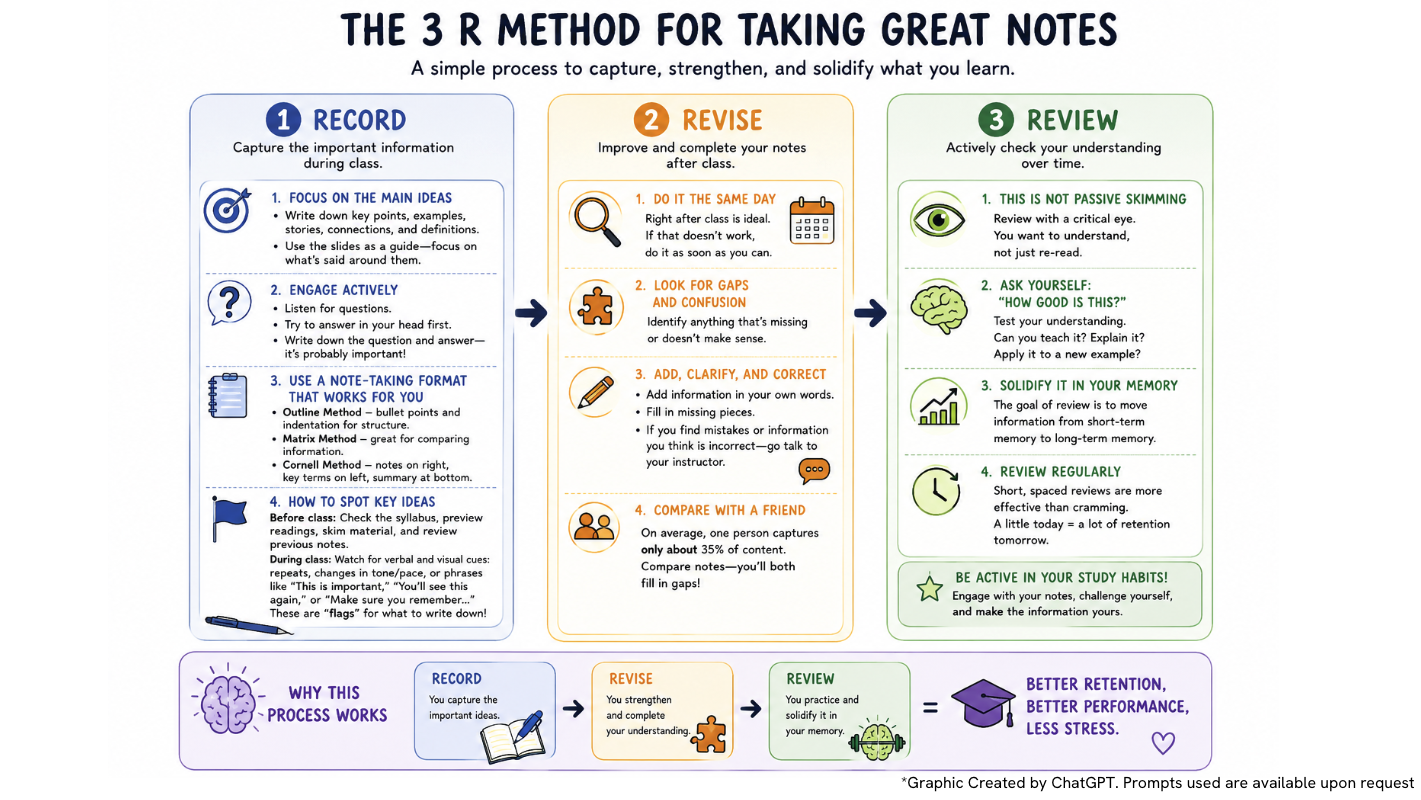
Notes That Help You Remember: The 3R Method
Your notes do more than record what your professor said, they're an active part of how you learn. Here's the psychology behind why notes matter and a simple 3-step method (Record, Revise, Review) to make your studying more efficient and less stressful.

How to Make a Study Plan That Actually Works
Planning is one of the most important academic skills a student can develop! A robust and well-created study plan reduces stress, increases your chances of success, and helps you feel more in control of your life.

Points or Progress? The Smart Way to Approach College Work
In college, it’s easy to feel overwhelmed by a constant flow of small assignments—quizzes, problem sets, discussion posts, and homework. Especially in STEM courses, these tasks are designed to help you build foundational knowledge. But many students fall into the trap of doing them just to earn points and check off a box. The real problem? When you focus solely on points, you miss the chance to turn these assignments into powerful learning tools.
How to Use Practice Exams Effectively: A Step-by-Step Guide to Deliberate Practice
If you’re preparing for an upcoming exam, practice exams are a powerful tool—if you use them correctly. Many students, however, make the mistake of simply looking up answers or relying on shortcuts, which leads to poor performance on the actual exam. In this blog post, we’ll break down how to best use practice exams, why they should be a part of a larger study strategy, and how this fits into the deliberate practice method for mastering your material.
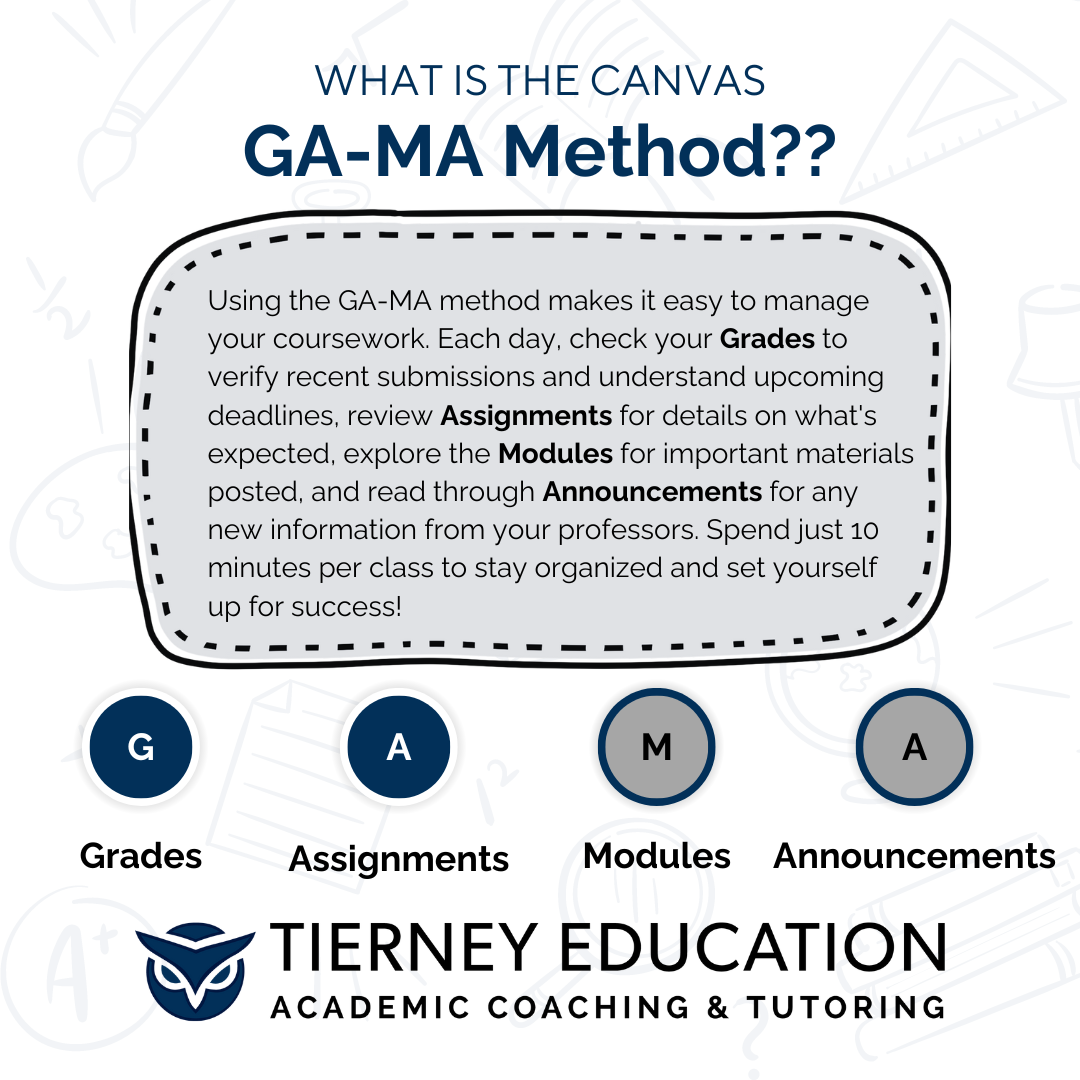
The GA-MA Method
As an academic coach, I’ve seen it countless times—students relying solely on the Canvas calendar to keep track of their assignments and deadlines. While the calendar is a useful tool, it has one major flaw: not every professor uses it consistently. Some assignments, readings, or even major announcements don’t show up in the calendar, which leaves students at risk of missing important information. This can lead to unnecessary stress and last-minute panic, something we all want to avoid.

Learning How to Learn: Learning Science and Study Skills
College is the perfect place to begin to understand who you are as a student--how you learn, your style of working, communication, peer connections and more. Once you step foot on campus, you may find that the student you were in high school and the styles it took for you to earn the good (or poor) grades might not be well-suited for what you face in college.

From ZZZs to As: The Relationship Between Sleep and Academic Success
Sleep is one of the most intriguing subjects to scientists, faceted at the intersection of Health, Psychology and Biology. While many of its components have been thoroughly studied, there is still much we don’t know about brain processes of sleep (like dreaming). One area that has been heavily researched and confirmed important in our daily lives in relation to good quality sleep is its impact on our learning processes, and ultimately, academic success.

The Importance of Self-Study as a Complement to Peer and Professional Tutoring
Self-study is the cornerstone of learning. It's where you explore new concepts at your own pace, develop critical thinking skills, and build a personal connection with the material. When students engage actively with the subject matter, they're better equipped to ask insightful questions and grasp the nuances of the topic.

Mastering Metacognition: Using Exam Wrappers to Become a Better Learner
Exam wrappers are a powerful tool that can help students improve their learning and performance in exams. By reflecting on their exam-taking strategies and identifying areas of strength and weakness, students can gain valuable insights that enable them to make more effective study plans, address knowledge gaps, and approach future exams with greater confidence. In this blog post, we explore the benefits of exam wrappers and provide practical tips on how to use them effectively. Whether you're a student, teacher, or lifelong learner, exam wrappers offer a simple yet powerful way to enhance your exam preparation and achieve your academic goals.

Retrieval Practice is the Key to Acing your Exams
Now that New Year's celebrations have ended and the new semester is in full swing, it's time to maximize your study habits to ace your exams. But how? Perhaps by now, you've heard different ways to study effectively, such as studying right before sleeping, spraying peppermint oil on your clothes, using multi-colored pens— the list goes on. What if the solution to your study needs is much simpler than cramming in as much information as possible before bedtime?