
Author: Kim Tierney, Director of Academic Coaching
Read time: 5 minutes
This content was largely informed by the book Study Like a Champ. We use this book to structure our Study Smarter Not Harder summer book study.
This content was created with the assistance of AI. All content was reviewed and edited by Tierney Education for accuracy, clarity, and usefulness.
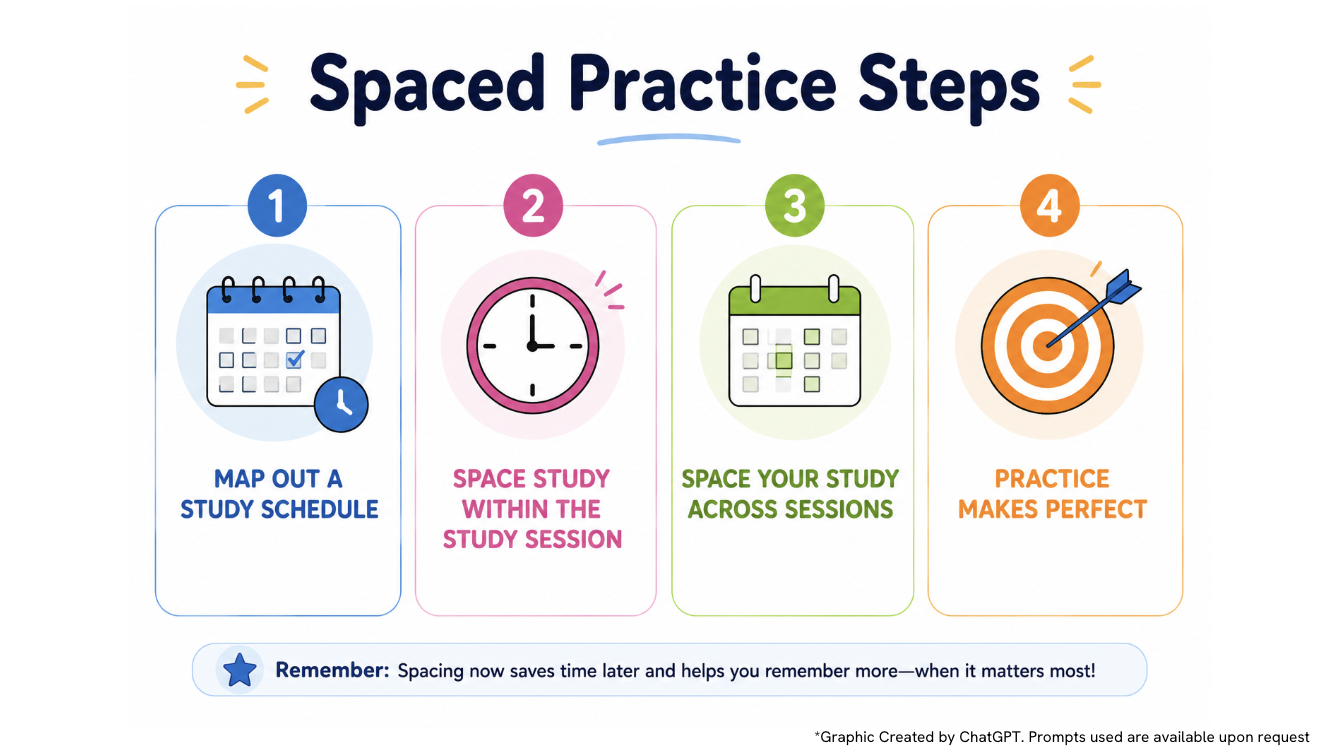
Spaced practice is one of the most effective ways to study. It means studying some material, then coming back to restudy that same material again on at least one other day, rather than trying to learn it all in a single sitting.
The alternative is massed practice: cramming or studying a lot of material in one long session without breaks. Massed practice can produce short-term gains, you really can get information into your head long enough to survive a quiz the next morning, but it's a poor strategy for anything you actually need to remember past that point. Spaced practice spreads learning out over time with breaks in between sessions, and that spacing is exactly what makes long-term retention possible.
Why This Works: A Quick Callback to How Memory Works
We've talked before (in our Note Taking post and our What Counts as Studying post) about how memory actually forms. Our brains like patterns, connections, and repetition. If you're regularly spiraling back to material you've already seen, you make it much easier to move that material from the "familiar with" column into the "know" column.
That distinction matters more than it sounds like it should. One of the biggest mistakes students make heading into an exam is confusing concepts they're familiar with with concepts they actually know. Spaced practice is one of the most reliable ways to close that gap, because every time you come back to something and successfully retrieve it, you're reinforcing the real thing, not just the feeling of recognition.
Step 1: Map It Out
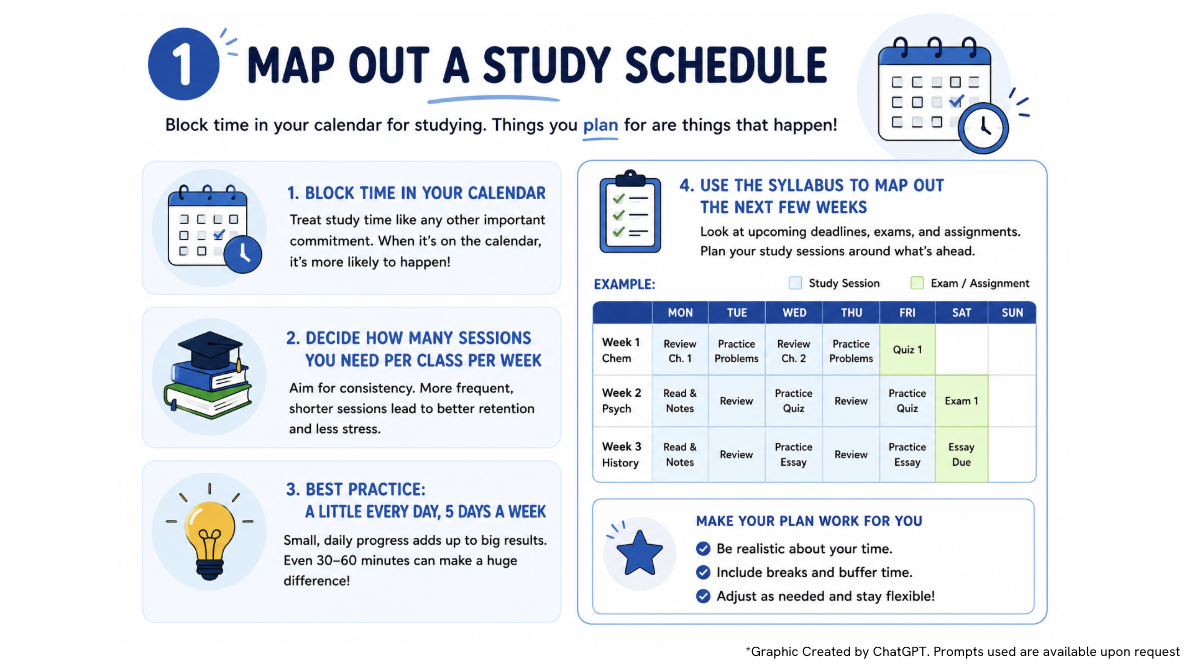
Before spaced practice can happen, it needs a plan. Use the same planning strategies that make any schedule work:
Include everything: classes, fun, commitments, and sleep.
Schedule when you'll study, and what you'll study, not just vague blocks of "study time."
Plan for breaks. Breaks, especially sleep, help consolidate information into memory. A break isn't wasted time, it's part of how learning actually sticks.
Start soon. The earlier you begin spacing out your studying, the more sessions you get in before it matters.
Decide how much time each class realistically needs, based on your own goals for that course.
Reward yourself for showing up and doing the work.
This can feel like a lot, studying something every day sounds exhausting when you first hear it. But right now, college is your job. You should be dedicating real time to coursework beyond just the hours you spend sitting in class. And daily practice pays you back: it saves you time on homework, makes midterms and exams far less stressful, and keeps finals week from turning into a pressure cooker, because you're not trying to learn a semester's worth of material in a week.
Use your time efficiently, and don't let "I'll do it later" become a trap. Go somewhere to study that isn't your dorm room. Make plans with a friend and hold each other accountable, even if you don't know anyone else in that particular class. Grab a study room at the library with a group of friends. You don't have to build this habit alone.
If you need more ideas on how to make a plan, you can read about that in our How to Make a Study Plan post.
Step 2: Space Study Within the Session
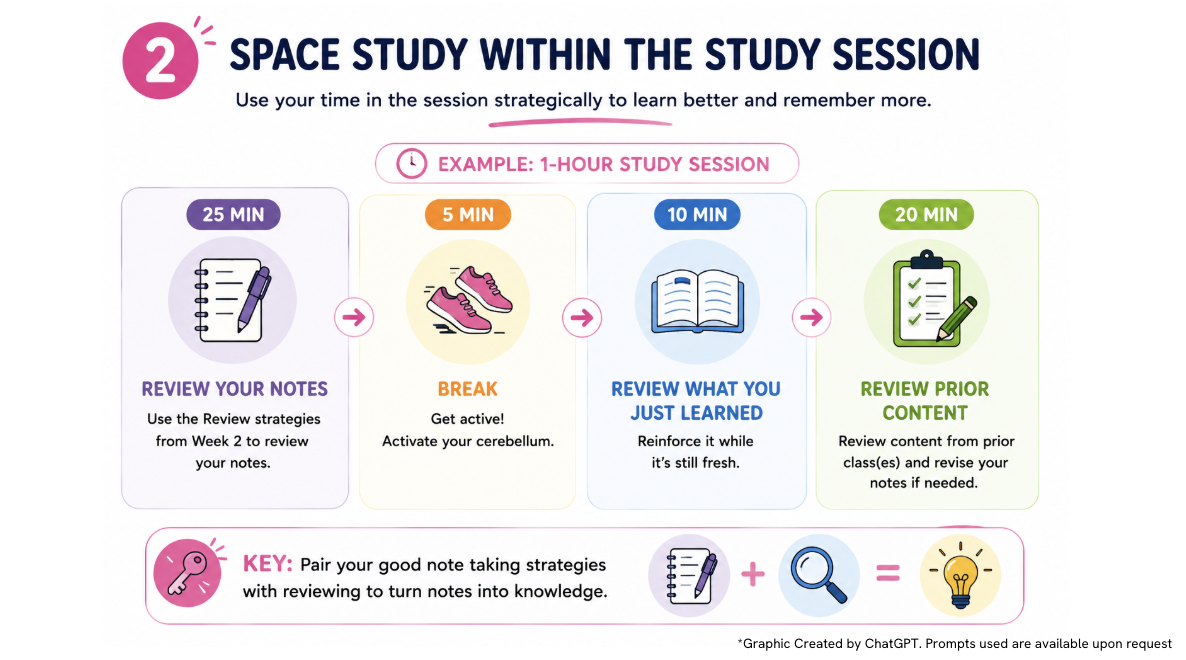
Spacing doesn't just apply across days, it also applies within a single study session. Here's what that can look like.
A 1-hour session, focused on one class:
25 minutes: Review your notes. Find gaps, find questions, add or clarify, fix mistakes.
5 minutes: Take a real break. Get up and move.
10 minutes: Review what you just learned, while it's still fresh.
20 minutes: Review prior content from that class, and revise your notes if needed.
A 2-hour session, focused on more than one class:
25 minutes: Review your notes for Class A. Find gaps, find questions, add or clarify, fix mistakes.
5 minutes: Break.
10 minutes: Review what you just learned for Class A.
25 minutes: Review prior content for Class A.
5 minutes: Break.
25 minutes: Review the most recent content from Class B.
5 minutes: Break.
20 minutes: Review earlier content from Class B.
The structure matters more than the exact minutes. Review something new, reinforce it quickly while it's fresh, then loop back to older material, all within the same sitting, with real breaks in between.
Step 3: Space Your Study Across Sessions
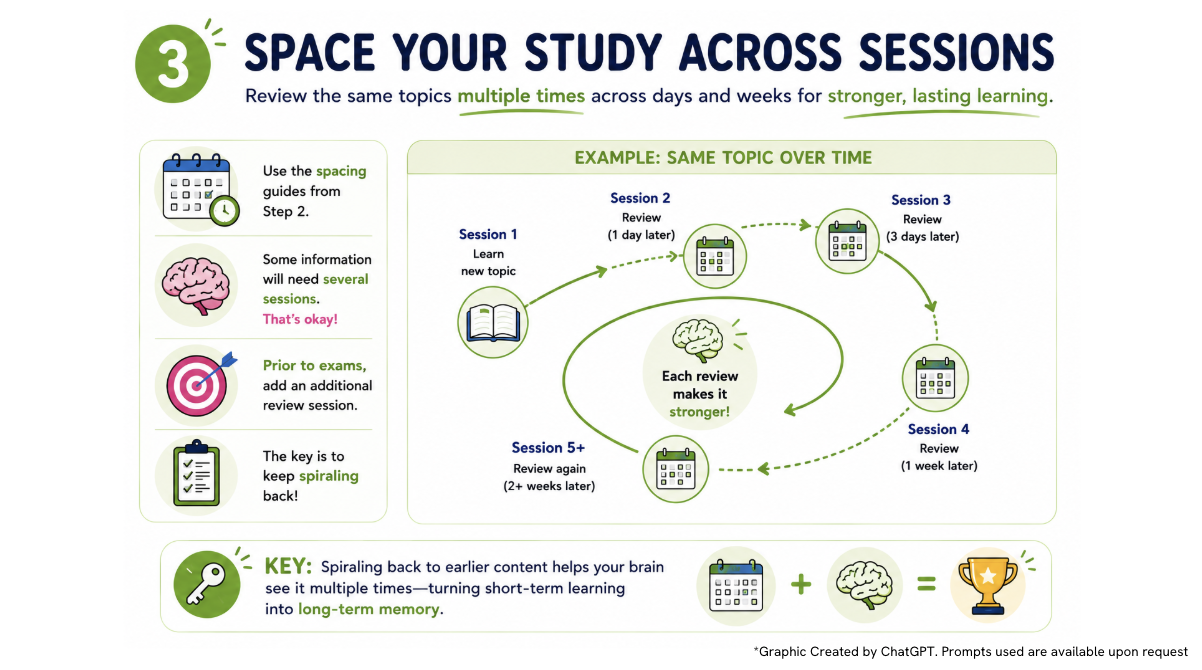
This is where spaced practice really earns its name: reviewing the same topic multiple times across days and weeks, not just within one session.
A typical pattern might look like: learn a new topic in Session 1, review it a day later in Session 2, review it again three days after that in Session 3, a week later in Session 4, and then again two or more weeks later. The key is to keep spiraling back to earlier content so your brain sees it multiple times, not just once and never again.
Some material will take several passes before it really sticks. That's normal, not a sign you're behind. Before exams, add an extra review session on top of your regular rotation.
You can read more about why this works on our blog post about the Best Way to Use Flashcards.
Step 4: Practice Makes Perfect (Or at Least Pretty Good)
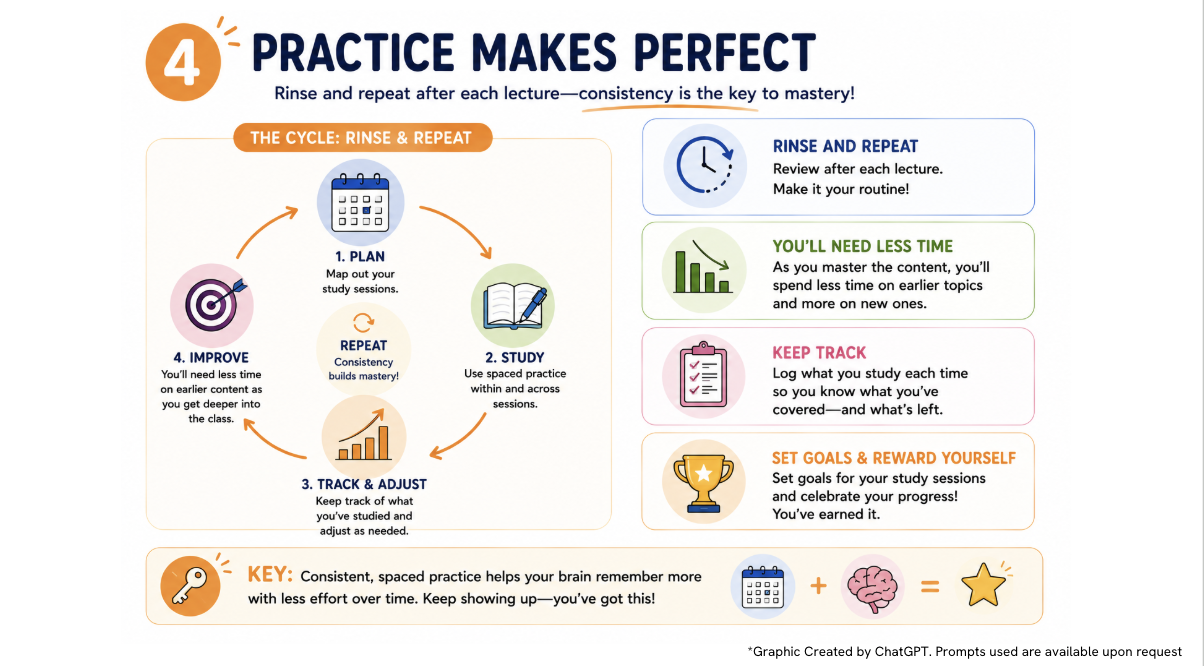
This last step follows the same self-regulation loop we've talked about before: plan, do, analyze, improve. Review after every lecture and make it a routine, not a special event reserved for the week before a test. As you build mastery of a topic, you'll genuinely need less time on it, which frees up more time for newer material. Keep track of what you've studied so you always know what's covered and what's still left. And set goals for your sessions, then actually celebrate hitting them. You've earned it.
Consistent, spaced practice helps your brain remember more, with less effort over time, than any single marathon cram session ever could. Keep showing up. That's really the whole system.
