
Motivation vs. Discipline: Why Showing Up Matters More Than Feeling Ready
Author: Kimberly Tierney, Director of Academic Coaching
Read time: 7 minutes
This content was aided by an AI language model. Learn more athttps://claude.com/.
I first heard this idea in, of all places, a workout class. The instructor told us she doesn't show up to her workouts every day because she's motivated to work out. She shows up because she's disciplined, because it's become part of her routine and her identity, whether she feels like it that morning or not.
That distinction has stuck with me ever since, and I think about it frequently when it comes to students.
Motivation Is a Feeling. Discipline Is an Action.
Motivation is the desire to do something. Discipline is showing up and doing it anyway, whether or not that desire shows up with you.
Here's the problem with waiting on motivation: it's unreliable. It comes and goes based on your mood, your sleep, the weather, how your day is going. If you only do the work when you feel motivated to do it, you're going to miss a lot of days, because motivation was never designed to be consistent. Discipline, on the other hand, doesn't ask how you feel. It's a habit, and habits don't need permission from your mood to happen.
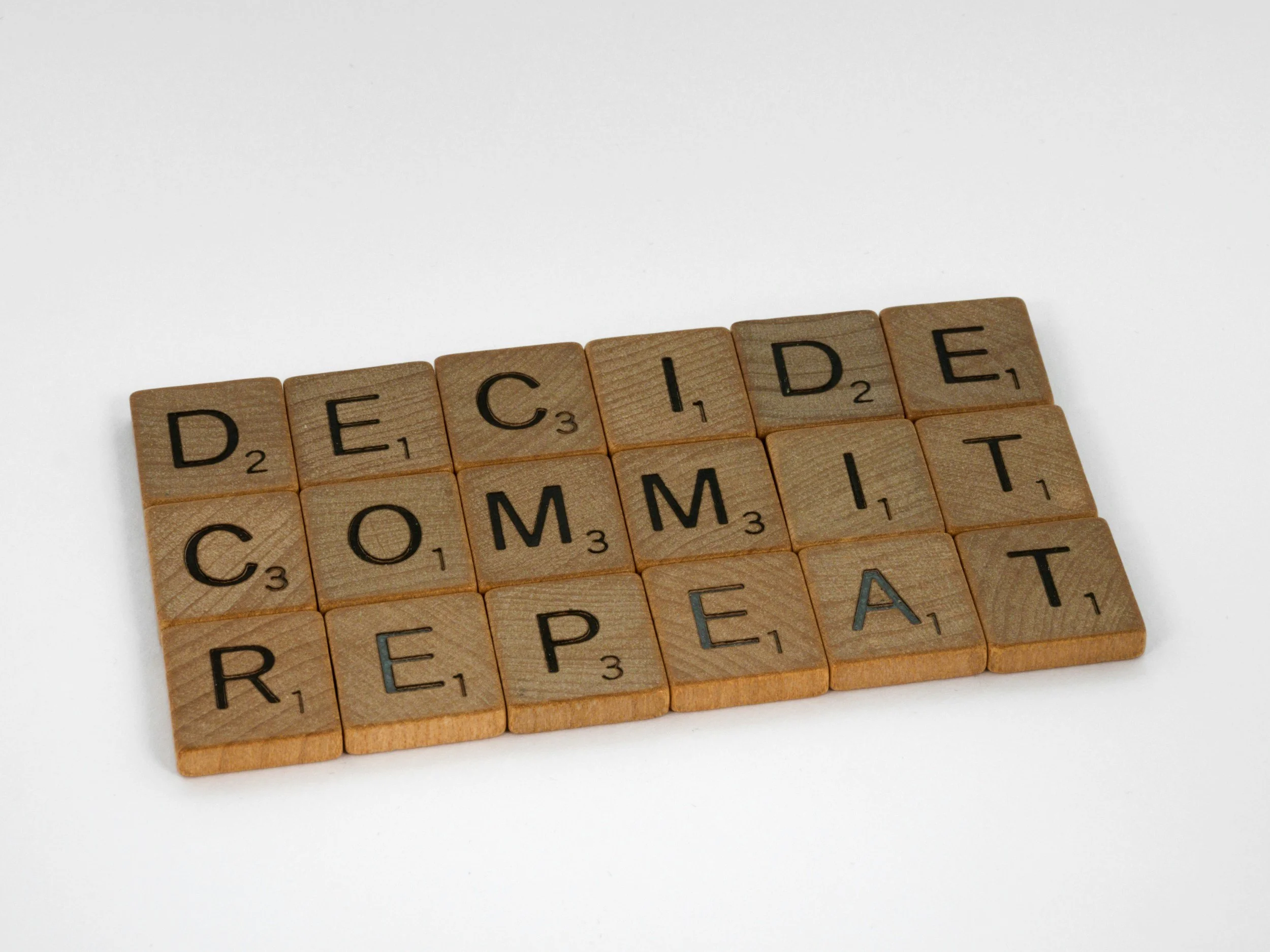
Students ask me all the time, "how do I get motivated to do more work?" And honestly, the real answer isn't satisfying: most of the time, you don't. You do it anyway.
The Students Who Succeed Aren't Always the Ones Who Are "Most Motivated"
The most successful students I work with usually aren't the ones with the most natural talent or the most excitement about school. They're the ones who are consistent, especially with the stuff that doesn't feel like it matters. The two-point assignment due on a Sunday night. Going to class on the first nice day of the semester when it would be so easy to skip. Doing the small, unglamorous, repetitive things, even when there's no immediate payoff.
This isn't just an observation. Psychologists Angela Duckworth and Martin Seligman found that self-discipline was actually a stronger predictor of students' grades, attendance, and academic performance than IQ. Talent matters, but it doesn't do much without the discipline to actually use it.
Motivation Disappears. Discipline Stays.
Part of life is doing things we don't want to do. That's not a flaw in the system, it's the whole system. If we only did the things we felt like doing, very little would actually get done.
I don't want to get out of bed at 5:30 a.m. to work out before my day starts. But, I want to be able to move well into my geriatric years, and I want the energy a morning workout gives me for the rest of the day. So, most days, I get up and go anyway. Not because I feel like it. Because it's what I do.
That's discipline. It's not about constant motivation, it's about building a habit sturdy enough that it doesn't depend on how you feel that day.
You're Not Lazy. Effort Is Conditioned.
Here's the part that matters most: this isn't about telling yourself you're lazy for not being disciplined. It's not about gritting your teeth harder or trying to muster up more willpower through sheer pressure.
Psychologist Wilhelm Hofmann, who studies self-control, and researcher Robert Eisenberger, known for his work on what's called "learned industriousness," point to something important: effort isn't a fixed personality trait. It's a sensation, and like most sensations, it can be conditioned. Eisenberger's research found that when effort is consistently followed by reward, people learn to associate the feeling of effort itself with something positive, and they start seeking out effortful things rather than avoiding them.
That connects to what psychologist Michael Inzlicht calls the "effort paradox." Effort is genuinely costly, and we're wired to avoid it. But humans also choose hard things on purpose all the time. Think about why people hike uphill for fun. Effort itself can add value to an experience, not just subtract from it.
So why does effort feel like punishment sometimes? Here's the pattern a lot of us accidentally trained into ourselves: if school came easily for you early on, you got rewarded for not needing effort. Good grades showed up without much struggle, so effort started to feel like a warning sign, evidence that something was going wrong. By the time you reach college, where genuine effort is required just to keep up, your brain has already learned the equation: effort = something's wrong = feeling bad. Effort becomes the tax you pay to get the reward, instead of part of the reward itself.
If that's the real problem, then the fix can't be more force, and it can't be more reps of the same approach that isn't working. Motivation is a feeling, and feelings are weather, they roll in and out regardless of what you do. The actual goal is to change what the act of starting predicts. Build a new association with effort, instead of trying to override the old one through sheer willpower.
Five Ways to Switch On Discipline
Pay for the effort, not the outcome. Stop attaching your reward to results. Results are slow and unreliable; you might not see them for weeks. Attach the reward to the act of showing up instead.
Move the reward to the doorway. Instead of promising yourself a treat after you finish studying, pair something you genuinely enjoy with the start of the session, a favorite drink, a specific playlist, a comfortable spot. Give your brain a reason to want to begin.
Shrink the entry point until refusing is absurd. Make the first step so small it feels ridiculous to skip: write one sentence, study for two minutes. Small is repeatable, and repeatable is what builds the new association.
Design the room, not your resolve. Discipline isn't about resisting more temptations through willpower. It's about designing your environment to have fewer temptations available in the first place. Choose the quiet study room over your dorm. Put your phone in another room. Make the plan before you need the willpower.
End on a win. Don't let a study session end on frustration or failure. Finish with something small you know you can complete, the same way you started.
Hard things stay hard. That part doesn't change. What can change is how your body and mind react to the hard thing in the first place.
If you want to go deeper on the psychology behind this, this video is a great place to start.
Build Systems, Not Willpower
Relying on willpower alone is exhausting, and it's not actually how most consistent behavior works. Researcher Wendy Wood, who has spent decades studying habits, found that roughly 43% of what people do every day is done automatically, out of habit, in a stable routine, not through active, in-the-moment decision-making. In other words, the most consistent people aren't gritting their teeth through willpower every single day. They've built systems that make the behavior close to automatic.
James Clear puts it simply in Atomic Habits: "You do not rise to the level of your goals. You fall to the level of your systems."
That's the real takeaway here. Don't build a study plan that only works during exam week, when motivation is naturally high because the stakes feel real. Build one that's doable on a random Tuesday in October, when nothing is due and nothing feels urgent. Make your systems hard to fail. Set a specific time to review notes each day. Keep a running homework list you check every morning. Study a little, consistently, instead of a lot, occasionally.
You won't always feel motivated. That's fine. You don't need to. You just need to show up anyway.
