
Seeking specific insights on learning, education, or all things Penn State? Dive into our blog with the search below!
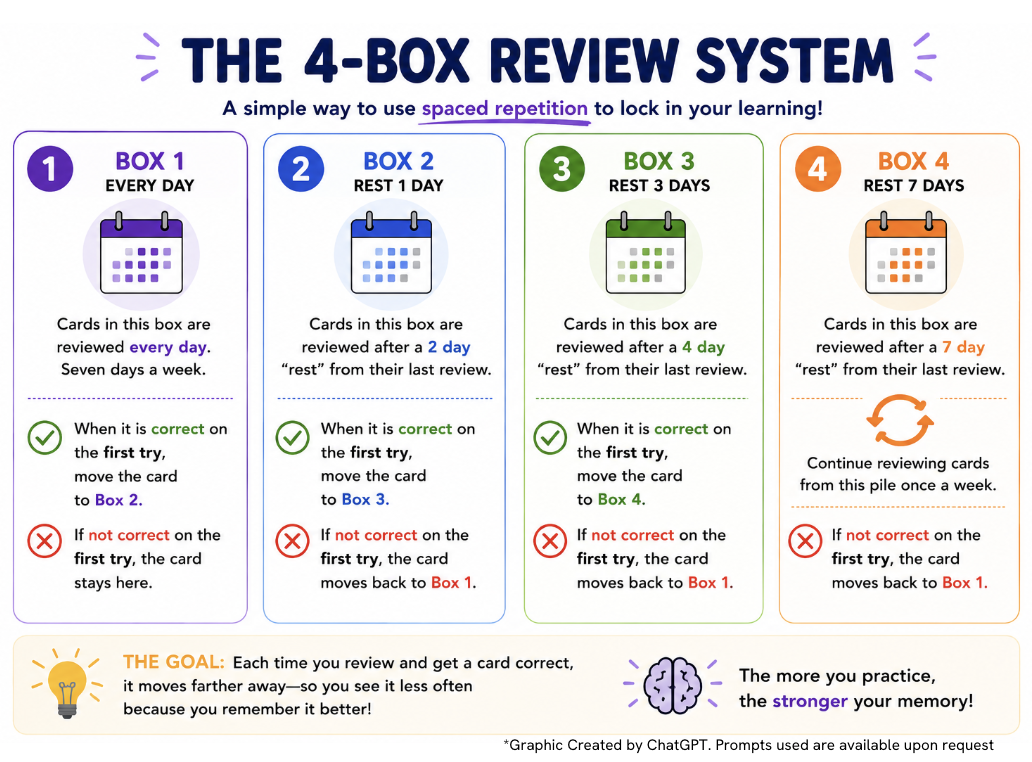
The 4-Box Review System: A Smarter Way to Use Flashcards
Not all flashcards deserve equal attention. This 4-Box Review System, based on a 50-year-old spaced repetition method, helps you spend more time on the cards you actually don't know and less time re-reviewing what you've already mastered

What Actually Counts as Studying?
Think studying only counts if you're sitting with a textbook the night before an exam? Reviewing notes, doing homework, and quizzing yourself all count too. Here's a simple 3-column trick to figure out what you actually know versus what just feels familiar.
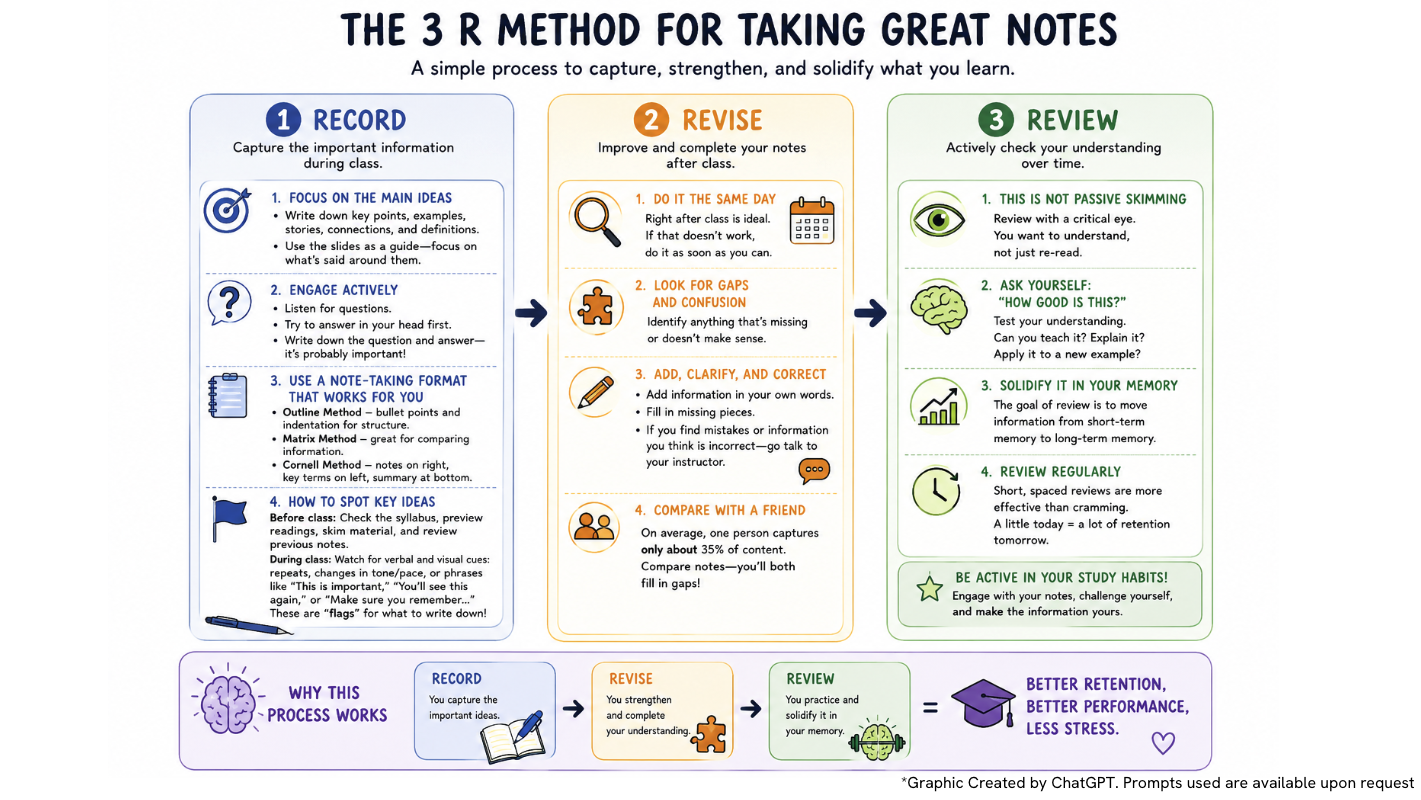
Notes That Help You Remember: The 3R Method
Your notes do more than record what your professor said, they're an active part of how you learn. Here's the psychology behind why notes matter and a simple 3-step method (Record, Revise, Review) to make your studying more efficient and less stressful.

Why We Don’t Accept New Tutoring Clients After Week 10 of the Semester
At Tierney Education, we pride ourselves on delivering high-quality, meaningful support to students. Over the years, we've refined our approach to ensure our tutoring services not only help students improve academically but also foster skills that lead to long-term success. One of our key policies is that we don’t accept new tutoring clients after Week 10 of a standard semester.

Points or Progress? The Smart Way to Approach College Work
In college, it’s easy to feel overwhelmed by a constant flow of small assignments—quizzes, problem sets, discussion posts, and homework. Especially in STEM courses, these tasks are designed to help you build foundational knowledge. But many students fall into the trap of doing them just to earn points and check off a box. The real problem? When you focus solely on points, you miss the chance to turn these assignments into powerful learning tools.

Learning How to Learn: Learning Science and Study Skills
College is the perfect place to begin to understand who you are as a student--how you learn, your style of working, communication, peer connections and more. Once you step foot on campus, you may find that the student you were in high school and the styles it took for you to earn the good (or poor) grades might not be well-suited for what you face in college.

The Importance of Self-Study as a Complement to Peer and Professional Tutoring
Self-study is the cornerstone of learning. It's where you explore new concepts at your own pace, develop critical thinking skills, and build a personal connection with the material. When students engage actively with the subject matter, they're better equipped to ask insightful questions and grasp the nuances of the topic.

Mastering Metacognition: Using Exam Wrappers to Become a Better Learner
Exam wrappers are a powerful tool that can help students improve their learning and performance in exams. By reflecting on their exam-taking strategies and identifying areas of strength and weakness, students can gain valuable insights that enable them to make more effective study plans, address knowledge gaps, and approach future exams with greater confidence. In this blog post, we explore the benefits of exam wrappers and provide practical tips on how to use them effectively. Whether you're a student, teacher, or lifelong learner, exam wrappers offer a simple yet powerful way to enhance your exam preparation and achieve your academic goals.