
Seeking specific insights on learning, education, or all things Penn State? Dive into our blog with the search below!

ADHD and Maturity: Your Brain’s On a Different Timeline
If you’ve ever wondered why staying organized, regulating emotions, or starting assignments feels harder for you than it does for your friends, this post is for you. Learn how ADHD affects brain development, and how you can use that knowledge to grow, thrive, and build real independence in college.

Time Management When Your Brain Lives in “Now”
Time management isn’t just about using a planner, it’s about how we perceive time. For students, especially those with ADHD, the future can feel blurry until it’s right in front of them, making deadlines and priorities tricky to manage. This post breaks down why that happens and offers practical, evidence-based strategies to make time visible, boost motivation, and help you work with your brain instead of against it.

Getting Started When You Don’t Feel Like It: Mastering Task Initiation and Self-Activation
If you’ve ever stared at your laptop knowing that you have a paper you should start, a reading assignment you should do, or a math problem set you should finish, you know what difficulties with task initiation feel like.
Task initiation, sometimes called self-activation, is the ability to get started with a task, especially one you don’t find interesting, easy, or urgent. It’s one of the core executive functioning skills that helps you move from intention to action. When it’s working well, it looks like this: you sit down, open your laptop, and begin your work without too much internal resistance. When it’s not, you may find yourself reorganizing your desk, scrolling social media, or convincing yourself you’ll “feel more ready later.”

Why Executive Functioning Skills Matter for College Success
Starting college is both an exciting and nerve-wracking journey! New experiences await, but so do high expectations. Many students stress about their ability to thrive academically while also joining clubs and organizations and taking advantage of the social aspects of a full college life. One of the most effective ways to rise to those expectation is by honing your executive functioning skills. The good news is, executive functioning skills aren’t set in stone, you can grow them!

Nothing Due? That Doesn’t Mean Nothing to Do
One of the most common mistakes college students make is equating “nothing due” with “nothing to do.” It’s easy to fall into the trap of thinking that if there aren’t any immediate deadlines, you can take the day off. But in reality, staying ahead is one of the best ways to manage stress, stay in control, and set yourself up for success—however you define it.

Building Lifelong Skills Through Habit Stacking
In a world where our to-do lists seem never-ending, finding simple, sustainable ways to accomplish goals is essential. Enter habit stacking, a powerful strategy for building new habits by tying them to ones you already do. Popularized by James Clear in Atomic Habits, habit stacking transforms your daily routines into opportunities for growth and productivity. For college students and professionals alike, mastering this skill can pave the way for lifelong success.
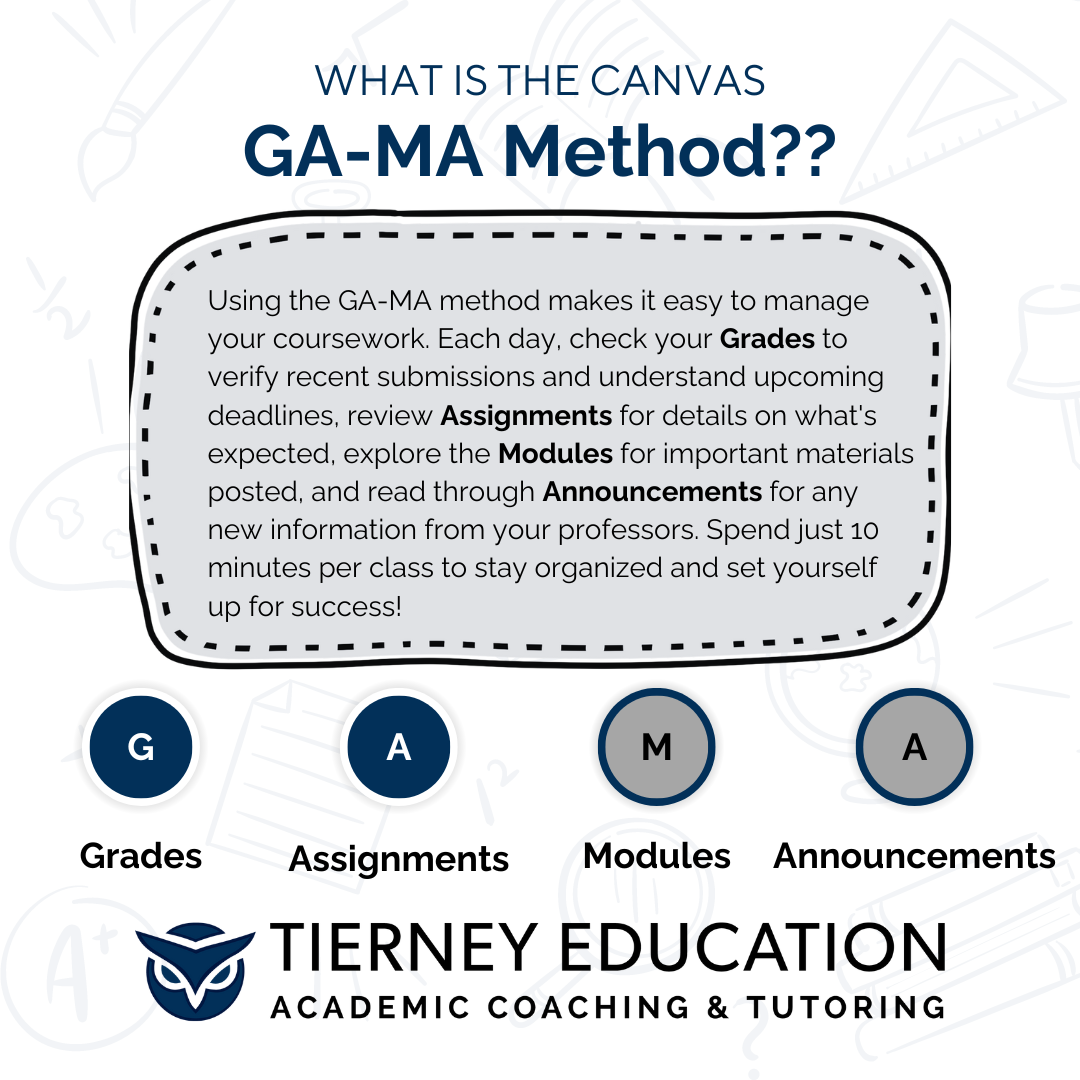
The GA-MA Method
As an academic coach, I’ve seen it countless times—students relying solely on the Canvas calendar to keep track of their assignments and deadlines. While the calendar is a useful tool, it has one major flaw: not every professor uses it consistently. Some assignments, readings, or even major announcements don’t show up in the calendar, which leaves students at risk of missing important information. This can lead to unnecessary stress and last-minute panic, something we all want to avoid.

What is Executive Functioning and Why Does it Matter?
Executive functioning refers to the set of mental processes that help you manage yourself, solve problems, and reach your goals. These skills are critical in academic settings because they allow students to take control of their learning, rather than reacting to every new task or deadline as it arises.
At its core, executive functioning is about thinking ahead, planning effectively, and staying organized. The great news? Like any other skill—whether it's reading, playing an instrument, or riding a bike—executive functioning can be improved with practice. Let’s take a closer look at some of these key skills:

Setting Achievable Goals: The SMART Way to Academic Success
Goal-setting isn't just a January ritual; it's a year-round endeavor crucial for academic success. However, the art of effective goal-setting is often misunderstood, leading students down a path of frustration and self-doubt. The right goals can be a roadmap to success, while the wrong ones can be a recipe for failure. In this article, we'll dive deep into the SMART framework, a proven methodology for setting achievable goals.

5 Apps to Help You Start Strong This Semester
Ah, the beginning of the semester… a time for new friends, new teachers, and new beginnings. For some, this period is like a refreshing blank slate; for others, it’s a time of much stress and responsibility. Fortunately, whether you’re looking forward to the new semester or already wishing for it to be over, there are apps available that will give you a leg-up. Listed below are 5 apps that will help you start strong this semester:

5 Mobile Apps to Help Limit Cellphone Use
In present-day society, smartphones have become devices that we are considerably dependent on in areas such as work, school, entertainment, and social life. In an instant, you can communicate with someone across the globe or find an actor’s entire filmography after tirelessly pondering where you’ve seen him before. Unquestionably, smartphone technology has revolutionized the way we live our daily lives, both positively and negatively.