
Seeking specific insights on learning, education, or all things Penn State? Dive into our blog with the search below!
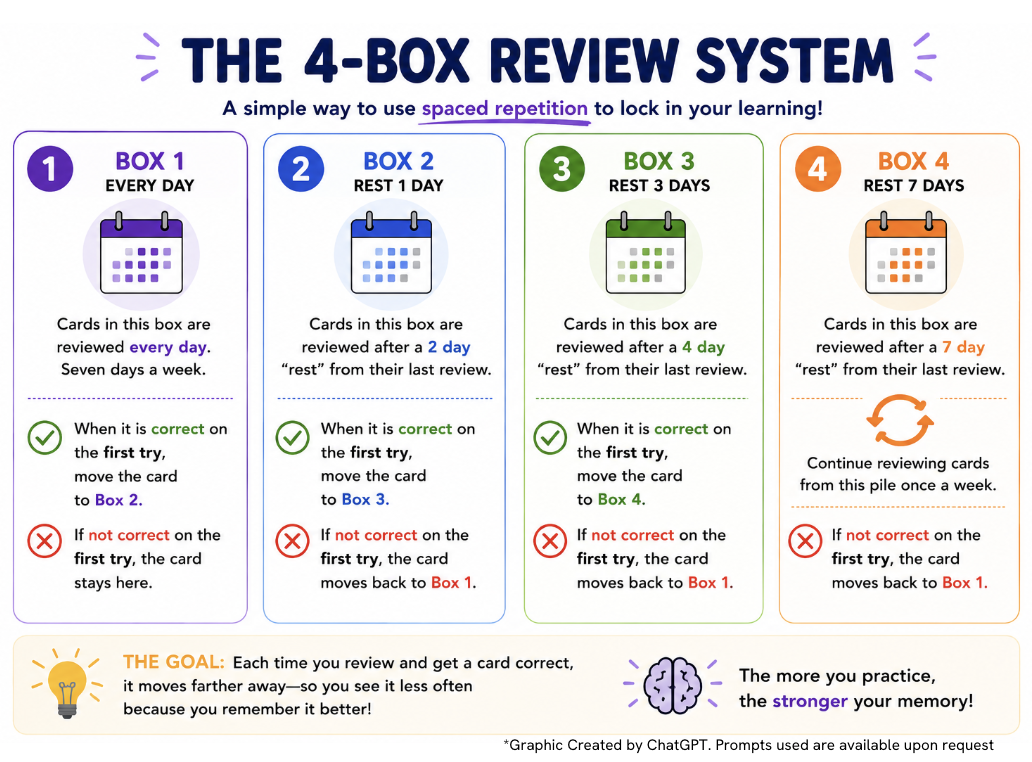
The 4-Box Review System: A Smarter Way to Use Flashcards
Not all flashcards deserve equal attention. This 4-Box Review System, based on a 50-year-old spaced repetition method, helps you spend more time on the cards you actually don't know and less time re-reviewing what you've already mastered

Mastering Metacognition: Using Exam Wrappers to Become a Better Learner
Exam wrappers are a powerful tool that can help students improve their learning and performance in exams. By reflecting on their exam-taking strategies and identifying areas of strength and weakness, students can gain valuable insights that enable them to make more effective study plans, address knowledge gaps, and approach future exams with greater confidence. In this blog post, we explore the benefits of exam wrappers and provide practical tips on how to use them effectively. Whether you're a student, teacher, or lifelong learner, exam wrappers offer a simple yet powerful way to enhance your exam preparation and achieve your academic goals.

What is Backward Course Design?
Backward course design, also known as backward design, is an approach to creating educational curriculum that begins with identifying the desired outcomes and then working backwards to create learning activities and assessments that align with those outcomes. This approach, first introduced by Grant Wiggins and Jay McTighe in their book "Understanding by Design", is considered to be more effective than traditional course design, which often starts with the selection of content and then tries to fit assessments and activities around it.