
How to Use CATA: Getting Around State College Without a Car
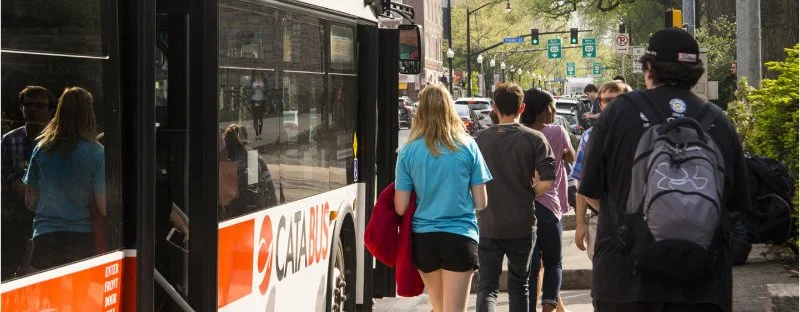
Photo from catabus.com
Author: Kimberly Tierney, Director of Academic Coaching
Read time: 4 minutes
This content was aided by an AI language model. Learn more at https://claude.com/.
Most students in State College don't have a car, and honestly, you don't need one. Between CATA's free routes and a handful of inexpensive paid options, you can get to class, downtown, and the grocery store without opening Uber or Lyft every time you need to go somewhere. Here's how to actually use it.
Start With the Free Routes
CATA's Blue Loop, White Loop, and Red Link are completely fare-free. No app, no card, no exact change. You just get on.
These three routes cover a lot of the everyday trips a student actually needs to make. Before you assume you need to pay for a ride somewhere, check CATA's System Map or use the Plan Your Trip tool to see whether your dorm, apartment, or usual routine is already covered by one of the free routes. A lot of students go the whole semester paying for rides they didn't need to.
When You Actually Need a Paid Route
CATA also runs other routes, sometimes called Community Service routes, that reach areas outside the three free loops, along with a microtransit service called CATAGO for spots that aren't on a fixed route at all. Both of these require a fare: $2.50 cash (exact change only, drivers don't carry change) or $1.25 if you qualify for reduced fare.
If your apartment is off one of the free loops, this is where you'll spend the little bit of money it actually takes to get around State College without a car.
The Easiest Way to Pay: The App
Skip the exact-change hassle and download the Token Transit app. It lets you buy and store tickets and passes right on your phone, and you just show the driver your screen when you board. A few options worth knowing about:
Single ticket: $2.50, good for one one-way ride.
Day Pass: $7, unlimited rides on any CATABUS route or CATAGO for a full day. Good for a day with a lot of stops.
7-Day Pass: $24.50, if you know you'll be riding paid routes regularly for a week.
Monthly OnePass: $98 (or $383 for four months), for students who commute on a paid route on a regular basis.
A good rule of thumb: if you're only occasionally leaving the free-route area, single tickets or the Day Pass make the most sense. If it's a regular part of your routine, a 7-Day or monthly pass will save you money over paying per ride.
Graduate Students, Faculty, and Staff: Check RIDEpass
If you're a graduate student, faculty, or staff member at University Park, don't pay full price for a monthly pass without checking RIDEpass first. It's a Penn State transportation program that gives eligible graduate students, faculty, and staff access to every CATABUS route for a steep discount off the regular monthly rate. Registration happens directly through the RIDEpass webpage for graduate students, or in person at the Transportation Services Office for faculty and staff. If you already ride the bus regularly, this is likely the cheapest way to do it.
A Few Things Worth Knowing Before You Ride
Transfers are free. If a trip requires two buses, tell the driver when you board the first one and ask for a transfer. It's good for up to an hour and covers your next ride.
Track your bus in real time using CATA's Bus Locator or the myStop mobile app, which shows you exactly when and where your bus will arrive, so you're not standing outside in January for no reason.
Routes change during breaks and game days. Check CATA's Service Calendar before assuming your normal schedule applies.
Ask your landlord. Some rental properties in State College include a bus pass as part of your lease. It costs nothing to ask before you buy one yourself.
Why This Beats Relying on Rideshare
A ride to class or the grocery store on Uber or Lyft can add up fast, especially during surge pricing on weekends or game days. CATA's free loops cost nothing, and even the paid options are a fraction of what a rideshare costs for the same trip. Once you know your routes, getting around becomes routine instead of something you have to think about (or pay for) every single time.
Take ten minutes before the semester starts to look at the system map and figure out which routes get you where you need to go. It's one less thing to worry about once classes start, and one less reason to keep a rideshare app open on your phone.
